
Every second a banking application is slow, a customer loses trust. Every unplanned outage during peak trading hours or salary credit season translates directly into regulatory scrutiny and revenue loss. For banks that have invested heavily in digital transformation, the gap between deploying a modern core banking platform and actually keeping it fast, available, and scalable is where most of the risk lives. That gap is exactly what application performance engineering exists to close.
Performance Is Not an Afterthought — It Is an Architecture Decision
Most banks treat performance testing as the last checkpoint before a release. Testers run load scripts, find bottlenecks, and scramble to patch them under deadline pressure. The results are predictable: partial fixes, deferred issues, and production incidents that catch everyone off guard. Application performance engineering takes the opposite approach. It embeds performance thinking into the design phase, the development phase, and every code review in between. Bottlenecks are caught before they become code, not after they become customer complaints.
For a bank running a core banking system on Oracle or Finacle, the cost of discovering a database contention issue in production rather than in architecture review can mean weeks of remediation work, service disruptions, and a great deal of explaining to senior management. Early engineering discipline removes this risk entirely.
What Happens When a Bank Goes Live Without It
Consider a large private bank launching a new mobile banking platform. The application performed adequately during controlled testing. On launch day, the user load multiplied by a factor the test team had not modelled. Response times degraded, session timeouts increased, and the helpdesk was flooded. The bank's engineering team spent the next two weeks in production performance troubleshooting mode, a reactive exercise that could have been avoided if performance testing and engineering had been woven into the delivery program from the start.
This scenario is not unusual. It repeats across banks every quarter, particularly during application migration events where assumptions about the target environment prove wrong under real transaction volumes.
The Core Components of a Banking Performance Engineering Program
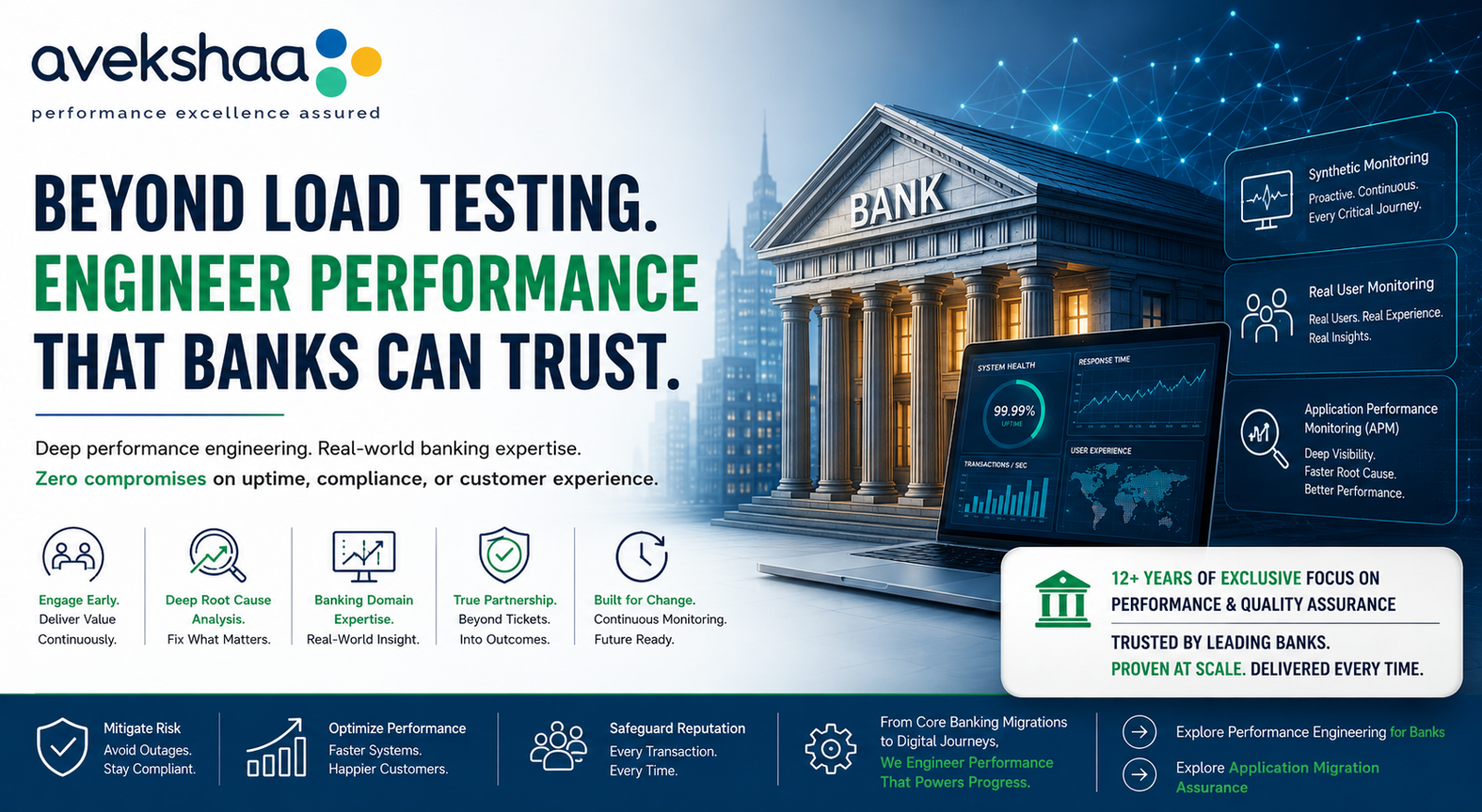
A mature program covers three broad areas. First, architecture review and performance modelling, where the system is assessed for scalability risks before a line of code is written. Second, continuous performance validation through automated testing pipelines that flag regressions on every build. Third, production observability through application performance management tools that provide real-time visibility into transaction response times, JVM health, database query performance, and end-user experience metrics.
Banks that operate these three layers in combination stop reacting to performance problems and start preventing them. The difference shows up in uptime figures, in customer satisfaction scores, and in the confidence of technology leadership when a new product is launched.
Why Specialist Expertise Matters
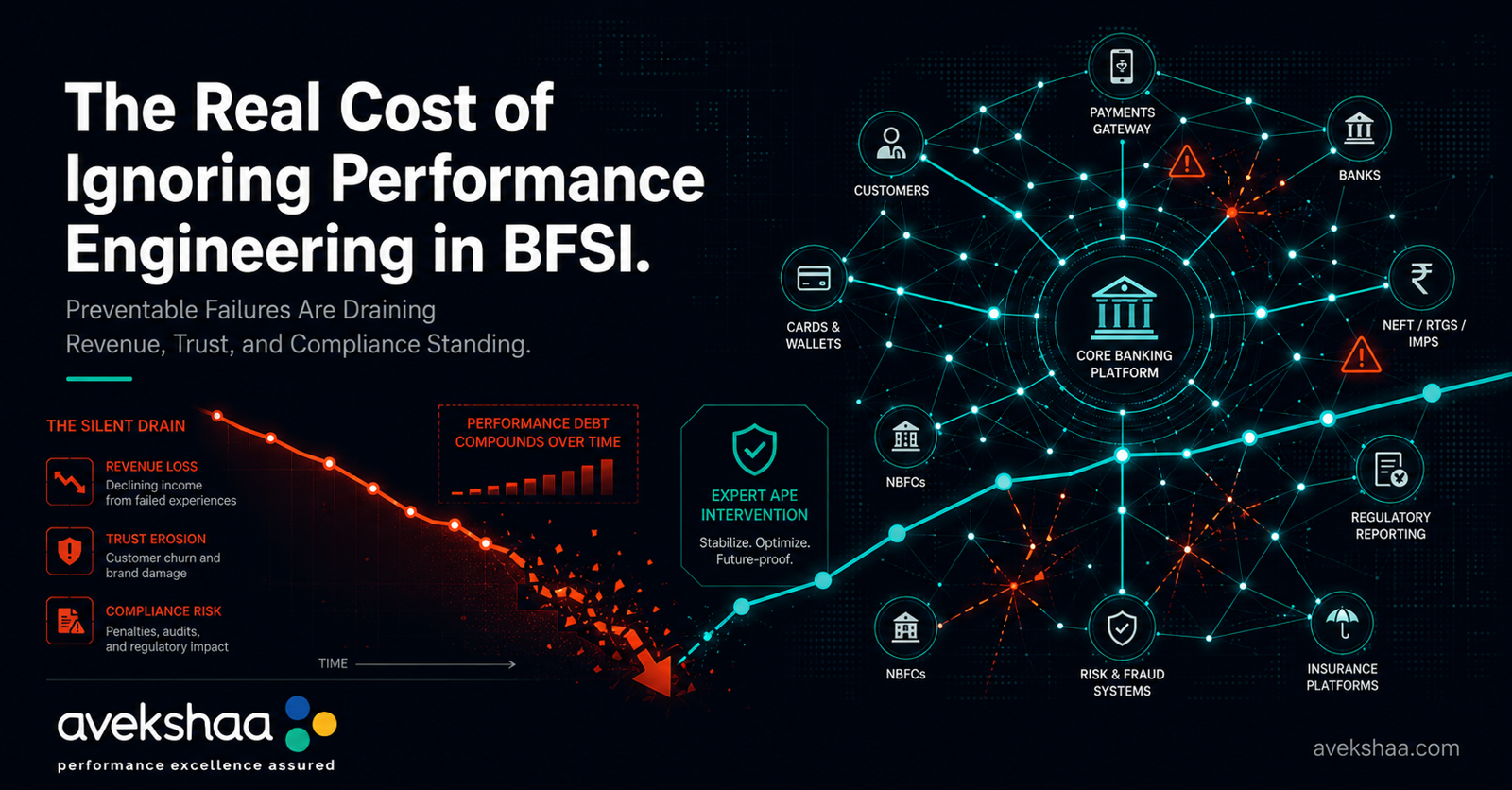
Performance engineering for banking applications is not generic IT work. The transaction volumes, regulatory uptime requirements, and complexity of integrations between core banking, middleware, payment networks, and digital channels demand specialists who understand both the technology and the banking domain. A team that has diagnosed Oracle Exadata bottlenecks on a core banking migration, tuned JVM garbage collection on a payment processing engine, and designed load models for salary credit day surges brings a different quality of outcome than a generalist testing team running off-the-shelf scripts.
Banks looking to build this capability should evaluate partners with a proven track record in performance engineering for banks, deep expertise in production environments, and the ability to engage from the architecture stage through to sustained post-production monitoring and tuning.
Getting performance right in banking is not a project; it is an ongoing discipline. The banks that treat it that way are the ones that keep their customers and their reputations intact when the pressure comes.






Write a comment ...